Window Furnishings 101: Shades, Blinds, and Hardware Design
"Window furnishings" is a newer decor term that captures something the label "window treatments" never fully did: Shades, blinds, drapery, and hardware should integrate into a whole-home decorating strategy, rather than separate purchases picked room by room. At Interior Views Design Center, we live by this theme because it adheres to the highest design standards.
Function Comes First with Window Furnishings
While selecting beautiful window treatments is fun, it’s important to understand what each room needs. For example, bedrooms may need room-darkening shades to block out unwanted light from street lamps or cars passing by. A home office, on the other hand, may only need a covering that softens glare without completely dimming the room. Once the function is settled, you can start having design fun.
Understanding Window Treatment Terminology
Though they all live under the window treatment umbrella, shades, blinds, hardware, and trim offer different practical benefits. Knowing what each provides can help you narrow down your collection options before discussing your unique design tastes with our professionals.
Here’s how they differ:
- Shades: Fabric panels that raise and lower over a window to control light and privacy.
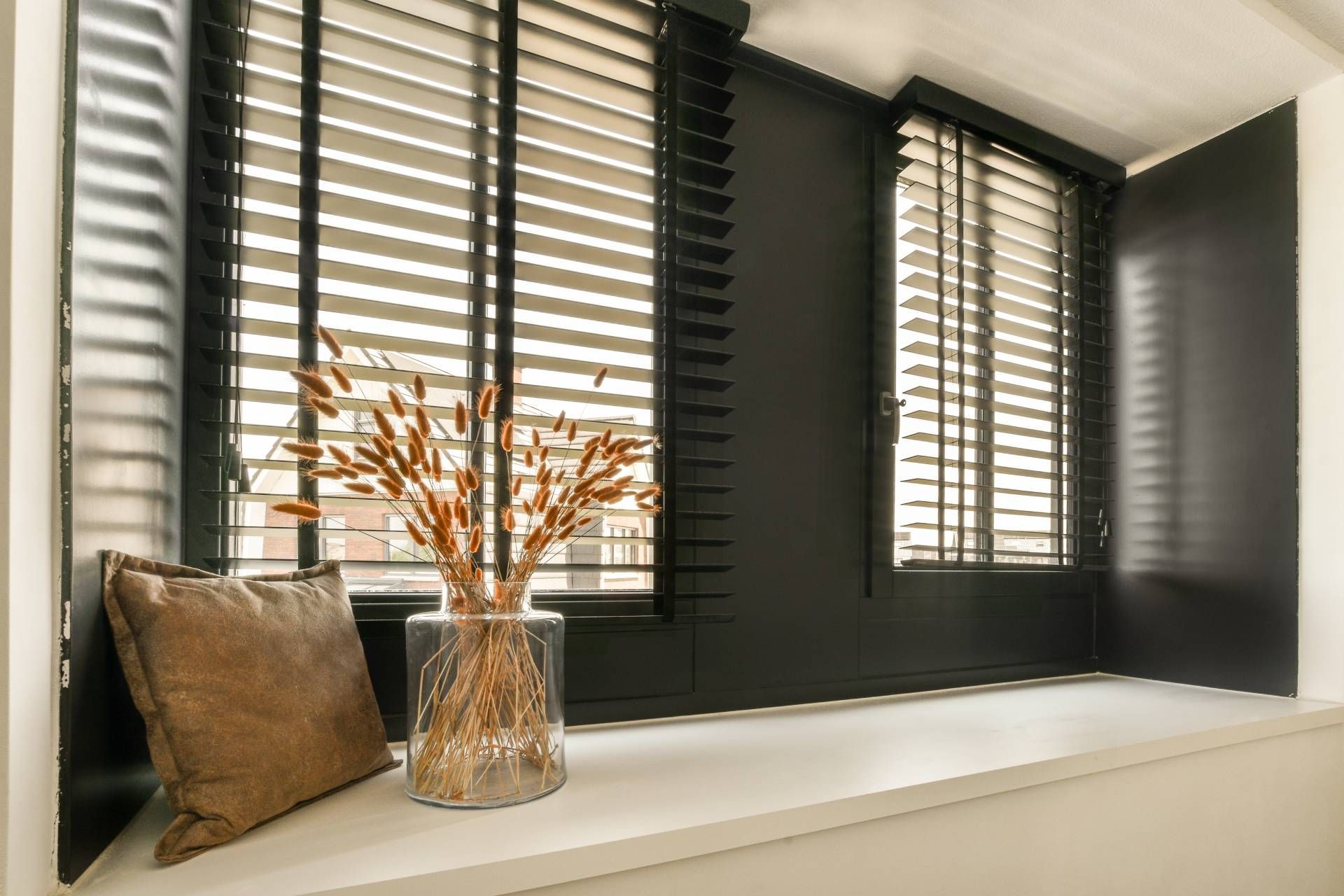
- Blinds: Slats that angle incoming light where you want when opened, and provide 100 percent privacy when closed.
- Trim: The decorative or functional woodwork that frames and finishes surfaces.
- Hardware: Mechanical fixtures and metal accessories attached to the room's doors, windows, and cabinets.
- Drapery Hardware: Rods, brackets, rings, and finials that hold fabric panels in place.
Coordinating Your Window Furnishings
The key to creating a design-forward window is knowing how to pair these different elements. Though there is no wrong way to design your home, these tips can help you determine the placement of each piece to create a cohesive, functional design. Think of it this way, each element has a job: shades and blinds offer light and privacy control, hardware frames the window, and trim connects the layers into a finished look.
Here’s what to know:
- Shades and Blinds: The base layer that manages light and privacy and can be layered with drapery for extra insulation.
- Drapery Panels: Hang from hardware for a decorative frame around the window. The rod and finials should complement the room's existing finishes rather than compete.
- Trim: Ties the two layers together visually.
The Bigger Picture on Window Furnishings
Shades, blinds, drapery, and hardware work best when considered together rather than separately, with a room's function and the home's existing finishes in mind. Comparing a few options side by side, rather than picking pieces one at a time, usually gets a window right the first time.
The key to creating a beautifully designed space is keeping the following in mind:
- Cohesion: A window is a puzzle piece that needs to fit naturally with a room's design, including wall colors and furniture.
- Function: Window treatments should maximize a room's strengths (such as views or natural light) and help mitigate challenges (such as privacy or temperature fluctuations).
- Personal Style: The best window treatments will complement your space while meeting your practical needs.
Plan Custom Window Furnishings with Interior Views Design Center
Our team at Interior Views Design Center can expertly put together window furnishings suited to your home. We offer interior design services, space planning, window treatments, custom drapery, custom drapery hardware, custom fabric/trim, embellishments, furniture, wall coverings/wallpaper, flooring, window tinting, and awnings.
Contact us for a consultation in Manasquan, Wall, Spring Lake, Sea Girt, Avon, Northern Brick, Farmingdale, Bay Head, Point Pleasant, Mantoloking, Lavallette, Seaside Park, Northern Ocean County, and Monmouth County, NJ.


